A Journey to Oneself (The Lincoln Highway by Amor Towles)
As you may have noticed, I’m not a big fan of American dramas, and I picked up this book at a nearby bookstore purely because of its cover. The illustration caught my eye, I read the description, and decided to buy it. Right away, I’ll say — I got something completely different from what I expected. And that’s what I want to talk about today: what Amor Towles’ The Lincoln Highway is actually about.
Plot
Eighteen-year-old Emmett Watson is released early from a juvenile correctional facility. He was serving time for involuntary manslaughter. The reason for his release? His father has died, leaving him as the guardian of his 8-year-old brother, Billy.
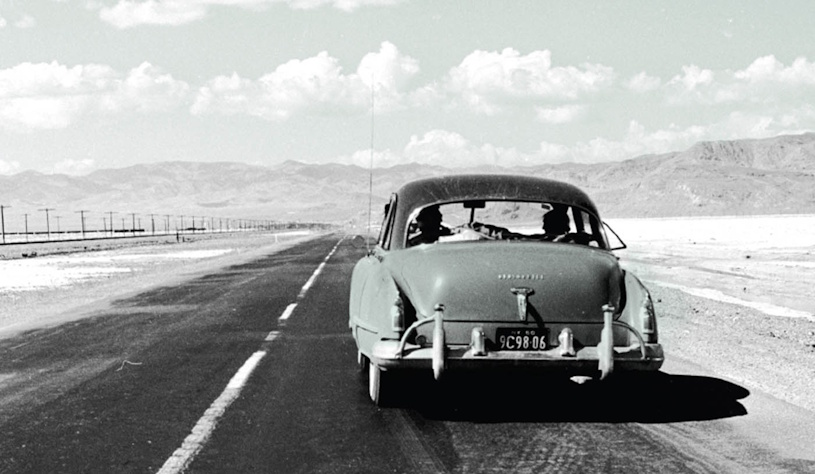
Upon returning home, Emmett learns that their farm is about to be seized by the bank due to outstanding debts. So, he decides to load up their belongings into his Studebaker and head west to California via the Lincoln Highway. That’s where their mother went when she ran away from their father years ago.
But before they can leave, two unexpected visitors show up — Duchess and Woolly, two acquaintances from the correctional facility. Unlike Emmett, they weren’t released; they escaped. Duchess proposes an alternative plan: instead of heading to California, they should go to New York, where Woolly has a hidden inheritance that he’s willing to share — if they help him retrieve it.
Emmett, determined to start fresh and be left alone, refuses. So, Duchess and Woolly simply steal his car. Emmett and Billy have no choice but to chase them to New York in order to get it back — and finally set off for California.
Spoiler Warning
I’ll be upfront — this review contains plenty of spoilers. The Lincoln Highway is a complex novel, and it’s impossible to discuss its essence without mentioning key plot points. So, if you’re planning to read it, I recommend coming back after you’ve finished. Who knows, maybe my thoughts will add a new perspective… or maybe not.
Expectations vs. Reality
First, let’s talk about expectations. As I mentioned earlier, mine were completely off the mark. Based on the book’s description, The Lincoln Highway is supposed to be a fast-paced road story about friendship and adventure, where the miles fly by as quickly as the pages. Is that true? Not at all. I’ve read plenty of reviews, and I’m convinced that most people either didn’t read the book at all or didn’t get past the publisher’s blurb. So many say things like: A heartwarming adventure. A coming-of-age story. Wonderful characters. Seriously? Are we talking about the same book?
Because, in reality, The Lincoln Highway is not a road-trip novel about adventure and friendship. It’s a harsh, deeply existential drama. Yes, it has moments of adventure and humor, but at its core, it’s a story about searching for one’s place in life. But I’m getting ahead of myself.
Pacing and Story Development
Many reviews describe the book as gripping, but for me, it wasn’t. Maybe I’m not the target audience, but I didn’t find it particularly engaging. I could put it down for days and return without feeling any urgency. Perhaps this is because the novel’s structure leans heavily on the second act, while the resolution is squeezed into the last 60-70 pages of a 550-page book. Or maybe it’s due to several subplots that, while relevant, feel somewhat excessive.
The events of the book take place over just ten days, with each day forming a chapter. I liked the idea that the chapters are numbered in reverse, as if counting down to something inevitable. However, as I said, for the first two-thirds of the book, this tension isn’t really felt.
Atmosphere
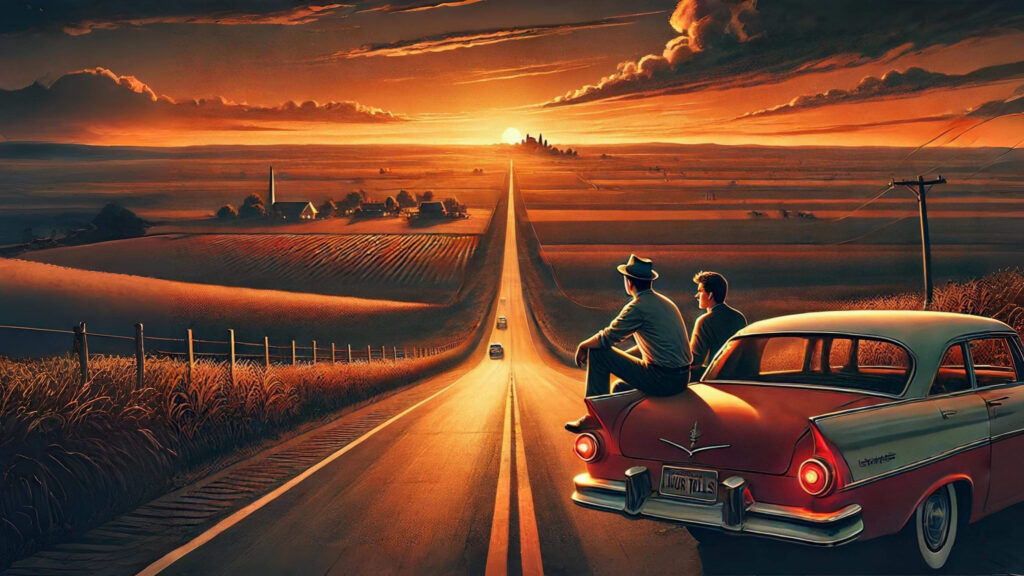
Despite some lighthearted moments, this is far from a “fun adventure”. The book is more of a deep dive into 1950s America — a slow, fading Nebraska contrasted with the fast-moving, never-sleeping New York City. Just as stark is the contrast between the level-headed Emmett and the reckless Duchess.
Characters
The characters are interesting to observe, largely because they are the architects of their own misfortunes. Two of them at least have some excuse — Woolly isn’t entirely well, and Billy is only eight years old. But Emmett, Duchess, Pastor John’s daughter Sally (who helped raise Billy while Emmett was away), and the others? They don’t have much of an excuse.
Who Is the Protagonist?
Now, let’s talk about the book’s deeper meaning. Many reviews claim that this is a coming-of-age story. I disagree. To understand The Lincoln Highway, we first need to determine who it’s really about. That is, who the protagonist is — the character for whose transformation the story exists.
At first glance, the answer seems obvious: Emmett. But if we apply classic storytelling theory, we see that a protagonist is someone who changes over the course of the story.
So, let’s go through the characters.
- Emmett has anger issues that got him into the correctional facility. By the end, he still has those issues. At both the start and the end of the book, he has a younger brother to care for and a business plan. Has anything changed? No.
- Duchess (Daniel Hewitt) was betrayed by his father. By the end of the book, he still hasn’t forgiven him. He also planned to escape the facility and pay off his debts, and that’s exactly what he does — meaning the story’s events didn’t change him either.
- Billy and Sally’s lives wouldn’t have changed much with or without this journey.
- But Woolly? His life changed completely. He was the beloved younger brother in a wealthy family, but by the end of the book, he realizes that his world is gone. His sister is pregnant, and soon, she will have her own child to dote on. The story doesn’t impact the others in a major way, but for Woolly, it marks the end of everything.
And, interestingly, the story starts because of Woolly — it’s his idea to go to New York. The author subtly misleads the reader, making it seem like Emmett is the central figure, but without Woolly, there would be no story at all.
Themes and Takeaways
So, what is The Lincoln Highway really about? It’s not about coming-of-age — each of these characters was already forced to grow up long before the events of the novel. Broadly, Towles explores the responsibility of parents to let their children move forward rather than tie them to the past. The novel also examines whether our advantages are truly advantages, and whether our perceived flaws are actually flaws.
But the most important theme, the one that isn’t stated outright, is this: even in the best version of the world, some people will never find their place. Woolly is the heir to a great fortune in what many consider the golden era of America — the 1950s. Yet despite having everything, he remains an outcast. His kindness, eccentricity, and innocence make him unable to fit into his time. And in the end, it leads to his fate.
Towles may mourn the past, but he makes it clear that even in the good old days, not everyone had a future. Part of his story echoes that of Sally, who also didn’t fit into life, but she made the decision to drop everything and start fresh, Woolly couldn’t do that.
The Lincoln Highway is a heavy and sorrowful drama about the search for one’s place in life — and what can happen if that place is never found, no matter who you are.
About the Author
A few words about the author: Amor Towles was an investment banker who always wanted to be a writer. After the release of his first book, Rules of Civility, he was able to quit his job and fully dedicate himself to writing. His second novel, A Gentleman in Moscow, was also well-received, and now Paramount+ is adapting it into a series starring Ewan McGregor. The Lincoln Highway is Towles’ third novel, named Amazon’s Best Book of 2021 and a New York Times bestseller for 30 weeks.
What Happened to Duchess?
That concludes my review of the book, but one highly debatable and spoiler-heavy question remains: Did Duchess die at the end when Emmett left him, unable to swim, in a boat in the middle of the lake? The answer: both yes and no.
Duchess, reaching for the money and falling into the water, likely drowned. But Daniel Hewitt? He didn’t.
He’s the storyteller. Towles subtly misleads the reader by making it seem like Billy is writing Emmett’s story, but the chapters about Duchess and Sally are in first-person, while all others are in third-person. My guess? Duchess went to find Emmett in San Francisco but instead met Sally, who had naturally gone her own way. Billy, who saw Sally as a mother figure, likely gave her his written story, which Duchess and Sally then rewrote — making it Woolly’s story instead.
At the book’s end, Duchess bows to Emmett — not for hitting him or leaving him to drown, but for giving him something far more important than money. Duchess drowned, but Daniel emerged — cleansed by water, leaving his past behind. This is confirmed by the final paragraph, where everyone is described in broad strokes, except for Sally, whose future is depicted clearly — she is bending over a stroller, looking at a baby. I dare to assume that it is her and Daniel’s child.