Vampires in a small Town (Salem’s Lot by Stephen King)
Recently, a third adaptation (if I’m not mistaken) of Salem’s Lot was released. So, today let’s revisit one of King’s most memorable novels, which is both very representative of early King and at the same time quite unique within his career as a whole.
Plot
Ben Mears, a writer, returns to Salem’s Lot, his hometown, to draw inspiration for a new book. However, he discovers strange changes in the town: some residents vanish without a trace, and others begin acting oddly. Soon, it becomes clear that this is not mere coincidence, but the result of an ancient evil rooted in one of the town’s oldest houses. At the heart of it all is Kurt Barlow, a powerful vampire whose influence spreads throughout Salem’s Lot, turning its residents into bloodthirsty creatures.
Atmosphere
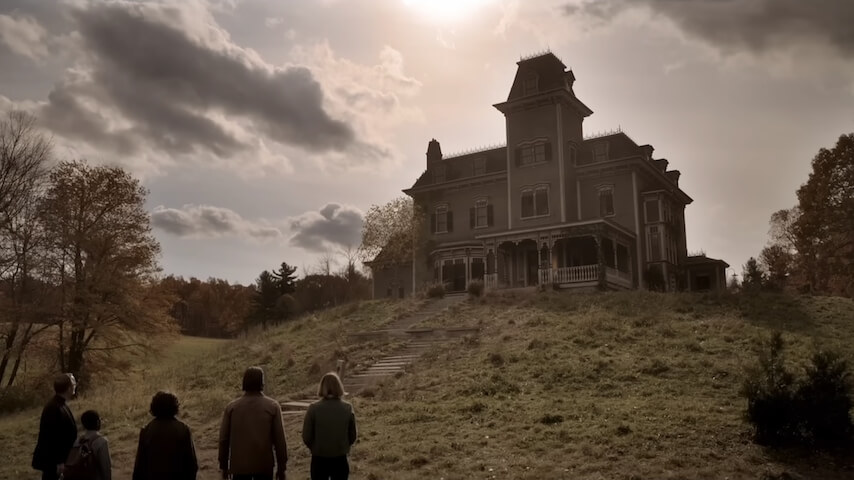
One of the book’s strongest points is undoubtedly its atmosphere. King masterfully conveys a sense of quiet, creeping evil that slowly blankets the town. Salem’s Lot itself is an unremarkable town, like thousands of others, with one ominous structure standing out – the Marsten House, where Barlow has made his lair.
King creates a believable world that also steadily builds a sense of dread. I called this novel “typical early King” because here, for the first time, he takes world-building and storytelling to the next level, creating not only a fully realized setting but also fully developed characters, even those appearing only briefly. His debut novel, Carrie, was worlds apart from Salem’s Lot in this regard. Later, King would repeat this approach in It, The Stand, and other signature works, building incredibly immersive worlds that are hard to let go of.
Characters
Salem’s Lot is full of strong characters. While Ben Mears is a bit predictable and likely modeled after King himself, the supporting characters, especially Dr. Cody and Father Callahan, are memorable. Each character has a unique background and personality, and these people are flawed, with real fears and weaknesses, making them feel three-dimensional and genuine.
Although King was already an experienced writer by the time Salem’s Lot was published (having over 20 stories and the bestseller Carrie under his belt), he doesn’t hesitate to eliminate main characters, adding an element of surprise to the novel. In his later works, King becomes more predictable in this regard. However, the beginning of the novel provides a major spoiler as to how many characters will survive.
Style
King seeks to create a sense of inevitability. The threat of vampirism spreads slowly, building up over time. King understands that horror doesn’t always require direct confrontation and can often be more effective through hints and details that gradually paint a picture of terror. As a result, Salem’s Lot creates a haunting atmosphere that stays with readers long after they’ve finished the book.
And, of course, King’s writing itself is notable. He writes vividly and fluidly, crafting images that immediately come to life. Every word is in its place, every scene filled with detail, making the book incredibly captivating. Even the scariest moments are described so compellingly that it’s impossible to put the book down. King strikes a perfect balance between drama and horror, allowing readers to delve ever deeper into the nightmarish world of Salem’s Lot.
Drawbacks
Salem’s Lot is a memorable novel, but it’s not without its flaws. Here’s what I’d consider to be some of the negatives:
- Slow pacing. Like many of King’s early works, Salem’s Lot is slow to build toward the main events. The first chapters detail the town and its residents, creating a rich atmosphere, but may feel overly long for some readers. For those unfamiliar with King’s style, the book may seem a bit drawn-out at times.
- Clichés. The plot relies on several traditional vampire tropes: a spooky house, ancient evil, a town falling under its sway. Although King does all this masterfully, some readers may find these elements predictable or conventional. King himself acknowledges that Salem’s Lot is a tribute to Bram Stoker and H.P. Lovecraft.
- Some predictable moments. Although King doesn’t spare his characters, as I mentioned earlier, the novel itself foreshadows who will survive from the start. Plus, several plot points are fairly easy to predict. Nonetheless, the novel is saved by its excellent execution.
Adaptations
Following the success of Carrie, the film rights to Salem’s Lot were purchased almost immediately. In 1979, a miniseries directed by Tobe Hooper was released. This adaptation is known for its atmosphere and remains one of the most significant adaptations of King’s work, although certain scenes from the book were altered. Despite the limitations of TV and technology at the time, this first adaptation still holds a solid rating on IMDb.
In 2004, another attempt was made to adapt Salem’s Lot in the form of a miniseries, with Rob Lowe and Donald Sutherland in the lead roles. Although technically superior, the plot was unnecessarily modernized and reworked, lacking the haunting atmosphere and psychological depth of the original novel.
In 2022, a full-length film adaptation was announced. Released on Max this October, it currently has the lowest rating among all Salem’s Lot adaptations. I wouldn’t be overly critical, though, as the film avoided unnecessary modernization of the story and, in my opinion, achieved a solid visual style. All in all, it’s well worth watching for fans of the genre and King in particular.
Conclusion
Salem’s Lot is both original and somewhat atypical for King, as he rarely delves into vampire themes despite his vast body of work. On the other hand, Salem’s Lot is a precursor to many of King’s masterpieces, already showcasing his trademark qualities: a deep understanding of human psychology, an ability to immerse the reader in atmosphere, and a knack for crafting truly terrifying stories.
Salem’s Lot is a memorable book, even alongside bestsellers like Carrie, The Shining, and The Stand. If you want an introduction to King’s style without the lengthy endings, unbeatable protagonists, or self-indulgent writing of his later works, Salem’s Lot is the perfect choice.